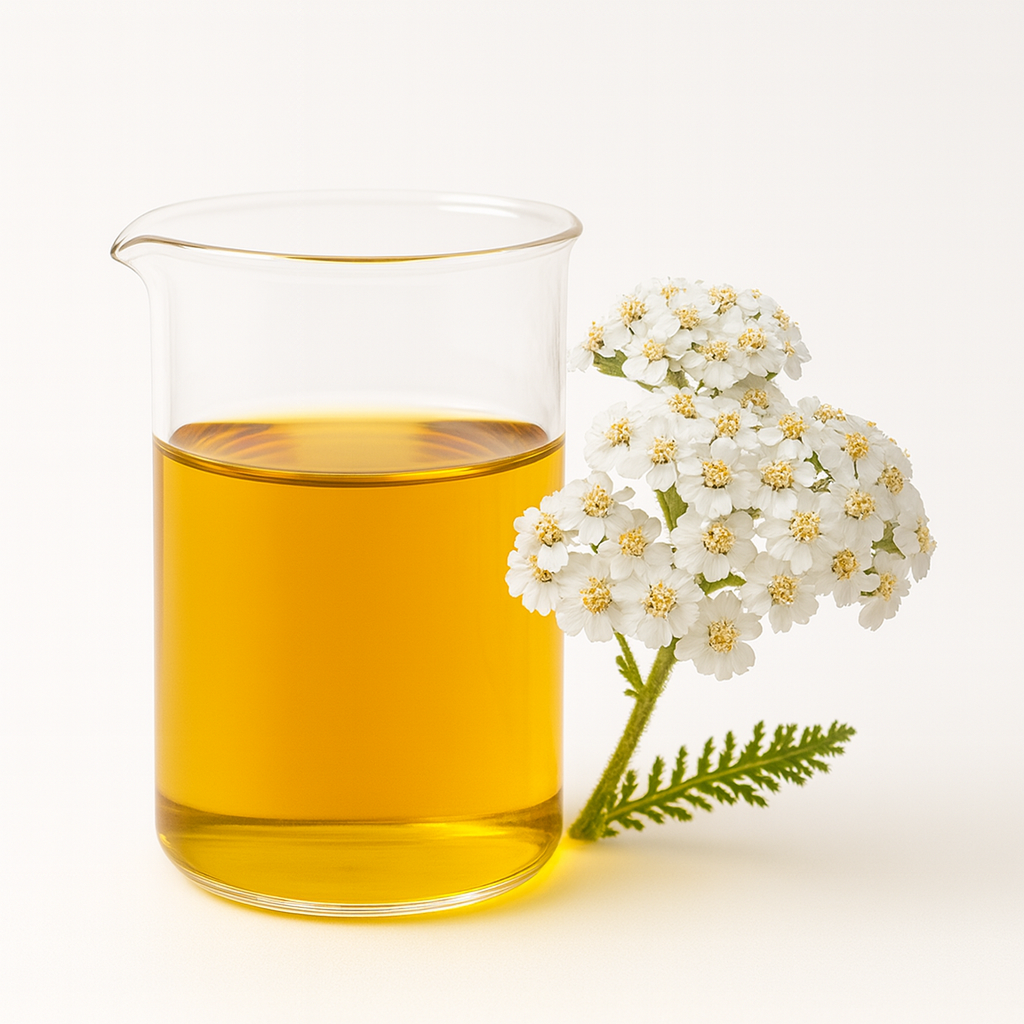
Achillea millefolium (yarrow) extract is a botanically derived active rich in polyphenols (e.g., flavones/flavonols) and phenolic acids that exhibit strong free-radical scavenging and metal-chelating behavior in vitro. These chemical attributes underpin its value in oxidative-stress mitigation, helping limit lipid peroxidation and supporting the visual appearance of photo-exposed skin when paired with adequate delivery and stabilization. Beyond redox activity, yarrow contains tannins and sesquiterpene lactones that provide a mild astringent effect and help tighten the look of pores and reduce surface gloss on oily zones.
On the scalp, yarrow’s combination of astringent tannins and documented antimicrobial/antibacterial activity against common gram-positive species supports formulas targeting sebum moderation, scalp freshness, and cosmetic dandruff care (non-drug). Anti-irritant and anti-inflammatory signals reported for yarrow preparations make it an attractive adjunct in rinse-off shampoos and leave-on scalp tonics designed for sensitive or easily reactive skin.

Quick Insights
Ingredient Rating:
GOOD
Type of Ingredient:
Conditioner, Astringent, Antioxidant, Soother, Anti-Inflammatory Agent, Barrier Support and Oil Control Agent
Intended Function:
Deliver antioxidant and soothing activity with mild astringency to improve the look of pores, reduce surface oil, and support scalp comfort.
Common Applications:
Low-dose inclusion in toners, clarifying serums, gel-creams, oil-control moisturizers, micellar waters, after-shave lotions, anti-pollution day creams, scalp tonics, soothing shampoos, and lightweight conditioners.
Target Audience:
Oily/combination and blemish-prone skin; redness-prone or easily irritated skin; consumers seeking “botanical/clean” positioning; oily scalp users and those desiring scalp comfort.
Also Known As:
Yarrow Extract, Achillea millefolium Extract, Yarrow Flower/Leaf/Stem Extract (depending on plant part), sometimes incorporated in blends marketed as “astringent botanical complexes.”
Safety Analysis
Toxicology & historical review: Cosmetic safety assessors have published ingredient dossiers on Achillea millefolium-derived materials used in cosmetics, summarizing composition, use levels, and sensitization/irritation data. Earlier reviews highlighted data gaps, while later, more complete assessments emphasize prudent formulation practices and monitoring for dermal sensitization. Patch testing and standard HRIPT evaluation at finished-product level are recommended for leave-on uses.
Sensitization potential: As a member of the Asteraceae family, yarrow contains sesquiterpene lactones — recognized contact allergens for some individuals with ragweed/Compositae sensitivities. Labeling and consumer guidance should note this cross-reactivity risk.

References
Ready to launch your next product?
We offer US-based Beauty & Personal care private label, product development and manufacturing, starting with low minimum order quantity.We specialize in helping brands innovate and launch new products that resonate with their audiences.
Explore product launch options for your brand today.


Join the Brand Builder’s Newsletter
Sign up and access insider manufacturing strategy, product development tips, and resources to help you build a stronger brand.


Thinking about launching something else? We can create a wide range of custom formulas for your brand. Explore our product development capabilities and ingredients.