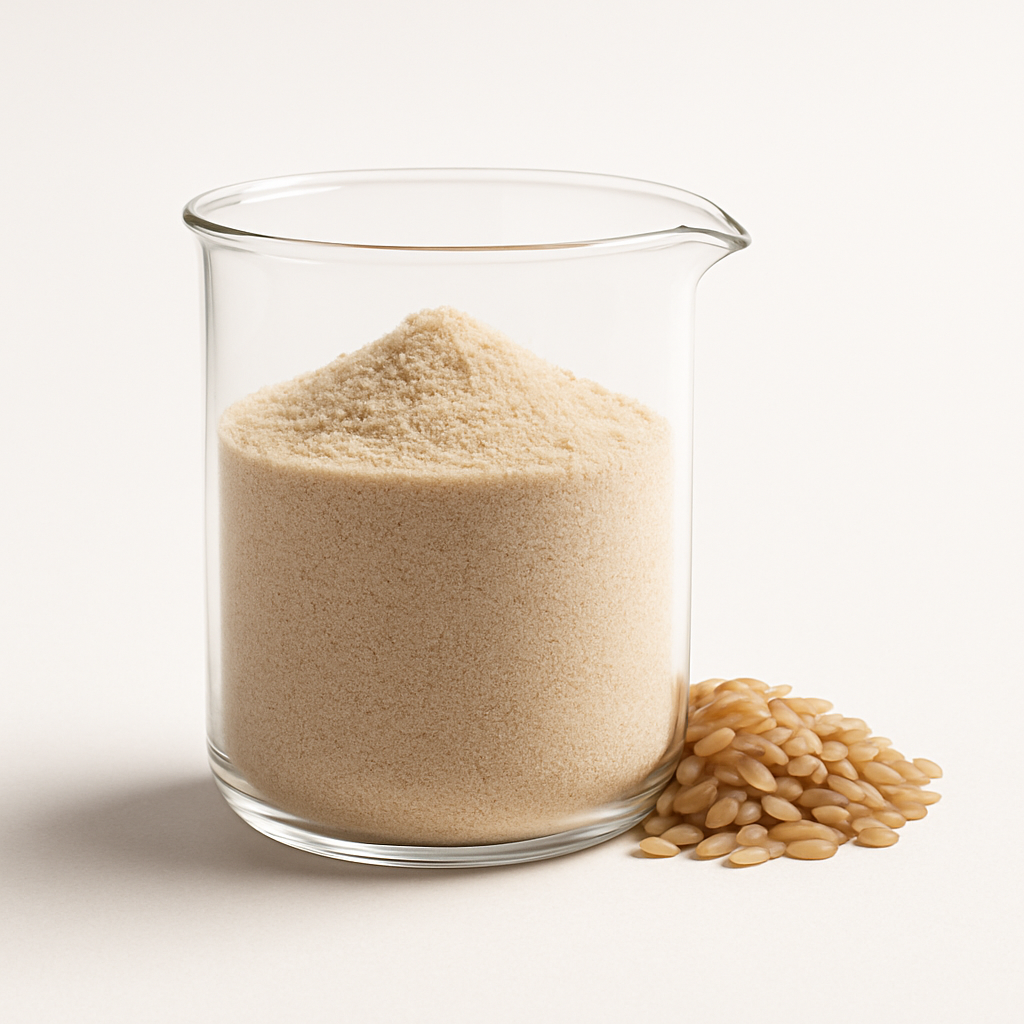
Oryza sativa (Rice) Extract is a botanical active typically obtained from rice seed/bran using aqueous, glycolic, or lipid carriers. Its value in skincare comes from a dense portfolio of antioxidants and barrier-friendly lipids found in rice fractions — most notably γ-oryzanol (a ferulic-acid–sterol ester complex), tocopherols/tocotrienols (vitamin E), phytosterols, and phenolic acids. These constituents scavenge reactive oxygen species generated by UV and pollution, help slow peroxidation of sebum and oils in the formula, and can support the stratum corneum with emollient lipids.
In hair/scalp care, the same antioxidant/lipid matrix helps protect the scalp from environmental oxidative stress and buffers surfactant systems against dryness. When incorporated into rinse-off and leave-on systems, rice extract functions primarily as an emollient/conditioner, improving fiber feel and slip while contributing to color- and shine-preservation via radical-quenching activity. For sensitive scalps or post-chemical services, formulas can leverage rice extract’s anti-oxidative and soothing profile to help reduce irritation potential without increasing surfactant harshness or build-up.

Quick Insights
Ingredient Rating:
GOOD
Type of Ingredient:
Emollient, Conditioner, Antioxidant, Soother, Barrier Support and UV Protector
Intended Function:
Provide antioxidant defense and emollient support to enhance skin barrier resilience and improve hair/scalp feel.
Common Applications:
Used in serums, moisturizers, eye creams, after-sun care, color-cosmetics, conditioners, masks, and scalp serums.
Target Audience:
Formulations for photo-exposed, dry/comfort-seeking skin and for oxidative-stress–prone hair/scalp (heat styling, color-treated).
Also Known As:
Rice Extract, Oryza sativa Extract, Rice Bran Extract, Rice Seed Extract, γ-Oryzanol–standardized rice extract.
Safety Analysis
Cosmetic safety assessments and post-market reviews indicate rice-derived cosmetic ingredients are generally safe as used, with low irritation potential and broad formulation compatibility; as with all botanicals, outcomes depend on solvent, concentration, and residual proteins. Typical use levels in leave-on products are modest, and sensitization is uncommon; nevertheless, brand owners should confirm allergen limits and conduct standard HRIPT/patch testing, particularly when combining with other actives that may increase reactivity. Rice-derived antioxidant systems can also stabilize oils in the base, indirectly improving product tolerability by limiting rancid-odor/oxidation by-products.

References
Ready to launch your next product?
We offer US-based Beauty & Personal care private label, product development and manufacturing, starting with low minimum order quantity.We specialize in helping brands innovate and launch new products that resonate with their audiences.
Explore product launch options for your brand today.


Not Quite Ready To Start?
Signup to our newsletter to receive the latest in cosmetic industry trends, expert advice, formulation tips, and insider-only offers.
Thinking about launching something else? We can create a wide range of custom formulas for your brand. Explore our product development capabilities and ingredients.