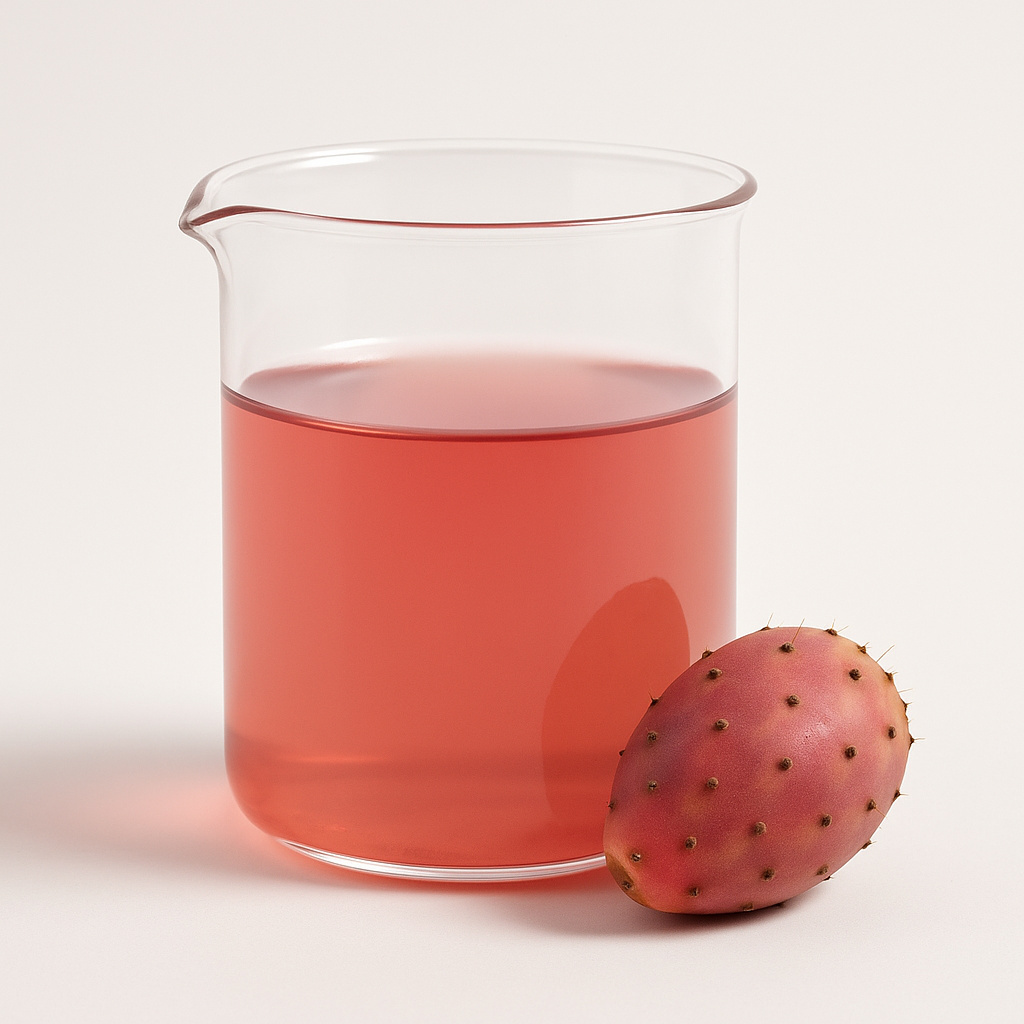
Hydrolyzed Opuntia Ficus-Indica Flower Extract—also known as hydrolyzed prickly pear cactus flower extract—is produced via enzymatic or chemical hydrolysis of the flowers of Opuntia ficus-indica. This process breaks down larger molecules into smaller, more absorbable fragments, enriching the extract with bioavailable polysaccharides (notably xyloglucans), essential amino acids, vitamins (C and E), flavonoids, and phenolic compounds. These active constituents confer superior hydrating, soothing, and antioxidant effects, promoting skin radiance, fortifying barrier function, and alleviating irritation—especially for delicate or environmentally stressed skin.
Moreover, when branded as EXFOLACTIVE®, this hydrolyzed extract demonstrates biological exfoliation by stimulating natural desquamation and enhancing cell turnover, resulting in smoother, more uniform skin tone and improved barrier integrity. While it’s primarily featured in skincare, its film-forming and conditioning potential suggest promising prospects in haircare as a scalp or strand-soothing adjunct.

Quick Insights
Ingredient Rating:
GREAT
Type of Ingredient:
Hydrator, Texture Enhancer, Exfoliant, Antioxidant, Soother and Barrier Support
Intended Function:
Deliver deep hydration, reinforce epidermal barrier integrity, gently promote natural exfoliation, and support radiant, even-toned skin with antioxidant protection.
Common Applications:
Ideal for inclusion in serums, moisturizers, peeling creams, sheet masks, toners, and facial cleansers designed to hydrate, smooth, revitalize, and protect the skin — particularly aging, dull, or irritated complexions.
Target Audience:
Brand owners and formulators aiming to craft luxurious, gentle, yet effective skincare — especially those developing products for sensitive, mature, or uneven skin who seek ingredients with clinically supported exfoliating, hydrating, and brightening functions.
Also Known As:
Hydrolyzed Opuntia Ficus‑Indica Flower Extract, Nopal Flower Hydrolysate, EXFOLACTIVE®.
Safety Analysis
Low hazard cohort: According to EWG’s Skin Deep database, this ingredient rates “LOW” for concerns such as cancer risk, immunotoxicity, and reproductive toxicity — and is not marked as restricted.
No formal hazard classification: Regulatory databases like The Good Scents Company list no GHS hazard classifications or precautionary statements, but recommend excluding it from fragrance or flavor uses. It’s categorized as a cosmetic agent with functions including skin protection and abrasives (in the sense of gentle exfoliation) .
Well-tolerated: Generally regarded as non-irritating and safe for topical use; nevertheless, patch testing is advisable for highly reactive skin types. Its activity in boosting cell renewal and soothing mechanisms — without adverse effects — has been validated in in vitro and in vivo evaluations.

References
Ready to launch your next product?
We offer US-based Beauty & Personal care private label, product development and manufacturing, starting with low minimum order quantity.We specialize in helping brands innovate and launch new products that resonate with their audiences.
Explore product launch options for your brand today.


Not Quite Ready To Start?
Signup to our newsletter to receive the latest in cosmetic industry trends, expert advice, formulation tips, and insider-only offers.
Thinking about launching something else? We can create a wide range of custom formulas for your brand. Explore our product development capabilities and ingredients.